

Laura Gabriela Sarbu
PC32 – Laura Gabriela Sarbu
Department of Chemistry, “Alexandru Ioan Cuza” University of Iasi, Romania
laura.sarbu@uaic.ro
| Novel tricyclic flavonoids as promising anti-MRSA agents |
| Laura Gabriela Sarbu1 1 Department of Chemistry, “Alexandru Ioan Cuza” University of Iasi, Romania |
| Abstract Methicillin-resistant Staphylococcus aureus (MRSA) is considered the main cause of nosocomial and community-associated infections. Because of the antimicrobial resistance, MRSA infections are difficult or impossible to treat, leading to high mortality rates and significant economic and societal costs [1]. In view of the MRSA challenge to public health all over the world, identification of new effective anti-MRSA agents is a high medical priority. In our study, a new series of tricyclic flavonoids with a methyl substituent on ring A of the flavonoid skeleton has been synthesized to assess their antimicrobial properties. The structures of novel synthetic tricyclic flavonoids and of their 3-dithiocarbamic flavanones have been proved by X-ray structural analyses. Minimum inhibitory concentration (MIC) and minimum bactericidal/fungicidal concentration (MBC/MFC) were used to evaluate the antimicrobial activity. Growth kinetics and time kill assays were employed to confirm the antibacterial effectiveness. Our results showed that the tricyclic flavonoids exhibited important antibacterial and antifungal activity, with MIC and MBC values as low as 1.95 µg/mL and 3.90 µg/mL recorded for compound 1 against a multidrug resistant MRSA strain [2]. Flavonoid 1 induced a more important bacteriostatic effect compared with chloramphenicol, inhibiting the bacterial growth for up to 24 h at concentrations equivalent to 2 × MIC. Also, 1 exhibited a significant bactericidal activity, with no viable cells evidenced after 6 h of incubation in the presence of MBC and a total kill effect recorded up to 24 h. All the data support the idea that flavonoid 1 is a reliable candidate to develop effective anti-MRSA agents. 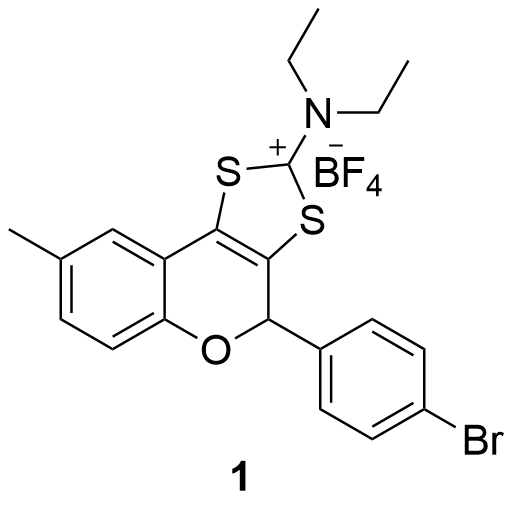 Figure 1. The structure of tricyclic synthetic flavonoid 1 |
| References [1] Murray, C.J.L.; Ikuta, K.S.; Sharara, F.; Swetschinski, L.; Robles Aguilar, G.; Gray, A.; Han, C.; Bisignano, C.; Rao, P.; Wool, E.; et al. Global burden of bacterial antimicrobial resistance in 2019: a systematic analysis. The Lancet 2022, 399, 629-655. https://doi.org/10.1016/s0140-6736(21)02724-0 [2] Moldovan, C.V.; Mantea, L.E.; Savu, M.; Jones, P.G.; Sarbu, L.G.; Stefan, M.; Birsa, M.L., “Novel Tricyclic Flavonoids as Promising Anti-MRSA Agents”, Pharmaceuticals, 17, 1276 (2024). https://doi.org/10.3390/ph17101276 |