

Alessandro Gualtieri
PC12 – Alessandro Gualtieri
Departement of Health Sciences, University Magna Graecia of Catanzaro, Campus S. Venuta, Viale Europa, loc. Germaneto, 88100 Catanzaro (Italy)
“AGreenFood” Research Center, University “Magna Græcia” of Catanzaro, Campus Universitario “S Venuta”, loc. Germaneto, 88100 Catanzaro (Italy)
| Phosphorite: useful industrial waste for one-pot green synthesis of quinolones |
| Gualtieri Alessandro1,2, Rosa Scarpelli1,2 , Monica Nardi1,2, Salvatore Procopio3, Antonio Procopio1,2 1 Departement of Health Sciences, University Magna Graecia of Catanzaro, Campus S. Venuta, Viale Europa, loc. Germaneto, 88100 Catanzaro (Italy) 2 “AGreenFood” Research Center, University “Magna Græcia” of Catanzaro, Campus Universitario “S Venuta”, loc. Germaneto, 88100 Catanzaro (Italy) 3 ARPA-CALABRIA (Regional Agency for Environmental Protection of Calabria), loc. Giovino, 88100 Catanzaro, Italy |
| Abstract Since 1928, industrial activities of Crotone have been characterized by the presence of the most important Italian chemical industries. The first production was of sulfuric acid, used for extraction and processing of phosphorite rocks rich of 238U and 232Th. [1] The trial was the basis to produce phosphoric acid, useful for fertilizers, detergents, feed, food additives and pesticides. [2,3] The industrial waste could create a problem from an environmental impact point of view if it is not possible to enhance its structural chemical-physical characteristics. The conversion of waste materials into valuable products or green chemicals using green chemistry principles is an important goal to promote an increasingly eco-sustainable society. In the present study, the performance of industrial wastes as the fumace slag was investigated for the synthesis one-pot of a heterocyclic classes of organic compounds biologically active as 4-quinolones (Figure 1). [4] 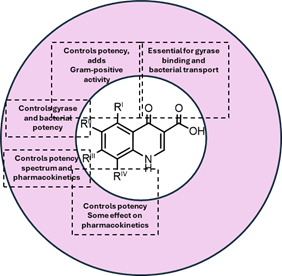 Figure 1. “Structure-activity” relationship of 4-quinolones |
| References [1] Menzel, R.G. Uranium, radium, and thorium content in phosphate rocks and their possible radiation hazard. J Agric Food Chem 1968, 16(2):231–234. https://doi.org/10.1021/jf60156a002 [2] Silva, P.S.C.; Mazzilli, B.P.; Fávaro D.I.T. Environmental contamination by technologically enhanced naturally occurring radioactive material-TENORM: A case study of phosphogypsum. J Radioanal Nucl Chem 2006,269(3):739–745. https://doi.org/10.1007/s10967-006-0294-3 269(3):739–745. https://doi.org/10.1007/s10967-006-0294-3 [3] El Afifi, E.M.; Hilal, M.A.; Attallah, M.F.; EL-Reefy S.A. Characterization of phosphogypsum wastes associated with phosphoric acid and fertilizers production. J Environ Radioact 2009,100(5):407–412. https://doi.org/10.1016/j.jenvrad.2009.01.005 [4] Zhang, J.; Wang, S.; Ba, Y.; Xu, Z. 1,2,4-Triazole-quinoline/quinolone hybrids as potential anti-bacterial agents. Eur J Med Chem. 2019 15; 174:1-8. https://doi.org/10.1016/j.ejmech.2019.04.033 |