

Emiliano Paradiso

| Conjugated NOD1/PRR Agonists Reveal Distinct In Vitro and In Vivo Immune Signatures |
| Emiliano Paradiso1, Špela Janež1, Veronika Weiss1, Ruža Frkanec2, Žiga Jakopin1. 1 University of Ljubljana, Faculty of Pharmacy, Askerceva cesta 7, 1000 Ljubljana, Slovenia; 2 Centre for Research and Knowledge Transfer in Biotechnology, University of Zagreb, 10000 Zagreb. |
| Abstract Pattern recognition receptors (PRRs), including Toll-like (TLRs), NOD-like (NLRs), and RIG-I-like receptors (RLRs), are central to detecting pathogen-associated molecular patterns and initiating innate immune responses [1]. While individual PRR activation initiates inflammatory cascades, synergistic crosstalk between distinct receptors can amplify signaling and generate unique immune signatures [2,3]. In this study, we report the design and synthesis of novel dual PRR agonists achieved by covalently linking a NOD1-selective ligand to agonists of TLR4, TLR7, or RIG-I. In vitro evaluations revealed that while unlinked agonist mixtures (notably NOD1 + TLR4) exhibited synergistic cytolytic activity, the covalent conjugates did not show significantly improved potency over the individual agonists. However, this activity profile shifted dramatically in vivo. In a murine vaccination model using ovalbumin (OVA) as the antigen, the conjugates demonstrated robust adjuvant efficacy despite their modest in vitro performance. Notably, the NOD1/TLR7 conjugate elicited the most pronounced systemic immune response, generating higher OVA-specific IgG titers than both the individual NOD1 ligand and the standard adjuvant, Alum. The profound in vivo adjuvant activity of these conjugates, contrasting with their attenuated in vitro potency, suggests that pharmacokinetic factors, such as enhanced cellular uptake, altered biodistribution, or the targeted, temporal release of agonists, play a critical role in their mechanism of action. 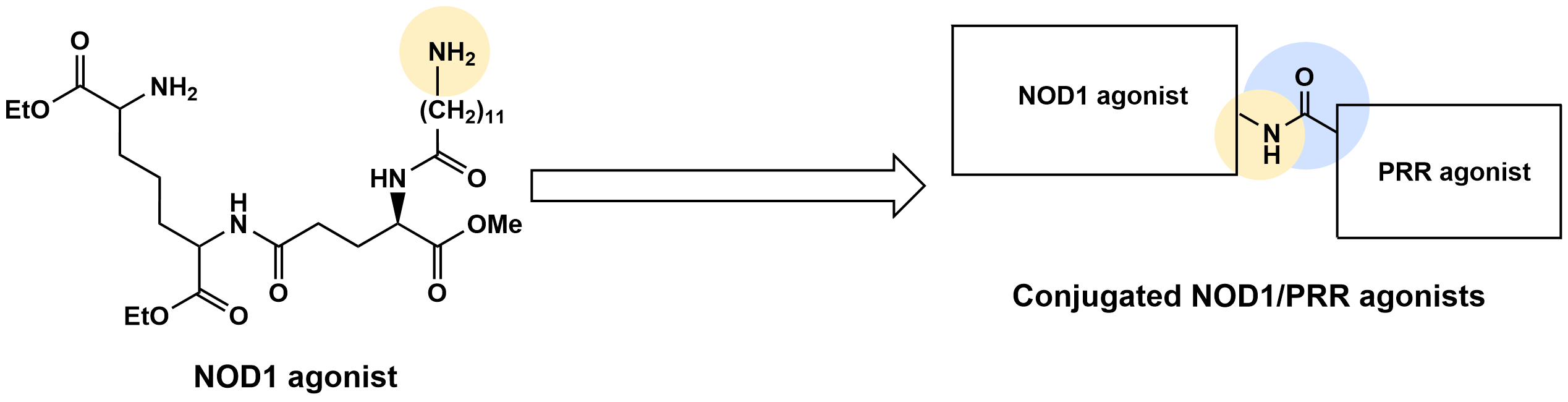 Figure 1. Design of conjugated NOD1/PRR agonists. |
| References [1] Lavelle, E. C et al. The Role of TLRs, NLRs, and RLRs in Mucosal Innate Immunity and Homeostasis. Mucosal Immunol. 2010, 3 (1), 17–28. https://doi.org/10.1038/mi.2009.124 [2] Tukhvatulin, A. I. et al. Combined Stimulation of Toll-Like Receptor 5 and NOD1 Strongly Potentiates Activity of NF-κB, Resulting in Enhanced Innate Immune Reactions and Resistance to Salmonella Enterica Serovar Typhimurium Infection. Infect. Immun. 2013, 81 (10), 3855–3864. https://doi.org/10.1128/iai.00525-13. [3] Budikhina, A. S. et al. Interplay between NOD1 and TLR4 Receptors in Macrophages: Nonsynergistic Activation of Signaling Pathways Results in Synergistic Induction of Proinflammatory Gene Expression. J. Immunol. 2021, 206 (9), 2206–2220. https://doi.org/10.4049/jimmunol.2000692. |