

Mihail Lucian Birsa
| Synthetic Flavonoid – An Alternative Solution to Combat Eskape Pathogens |
| Mihail Lucian Birsa1 1 Department of Chemistry, “Alexandru Ioan Cuza” University of Iasi, Romania |
| Abstract ESKAPE pathogens are considered as global threats to human health. The discovery of new molecules for which these pathogens have not yet developed resistance is a high medical priority [1]. Synthetic flavonoids are good candidates for developing new antimicrobials [2, 3]. Therefore, we report here the potent in vitro antibacterial activity of BrCl-flav (Figure 1), a representative of a new class of synthetic tricyclic flavonoids. Minimum inhibitory/bactericidal concentration, time kill and biofilm formation assays were employed to evaluate the antibacterial potential of BrCl-flav. The mechanism of action was investigated using fluorescence and scanning electron microscopy. A checkerboard assay was used to study the effect of the tested compound in combination with antibiotics. Our results showed that BrCl-flav displayed important inhibitory activity against all tested clinical isolates, with MICs ranging between 0.24 and 125 µg/mL. A total kill effect was recorded after only 1 h of exposing Enterococcus faecium cells to BrCl-flav. Additionally, BrCl-flav displayed important biofilm disruption potential against Acinetobacter baumannii. Those effects were induced by membrane integrity damage. BrCl-flav expressed synergistic activity in combination with penicillin against a MRSA strain. Based on the potent antibacterial activity, low cytotoxicity and pro-inflammatory effect, BrCl-flav has good potential for developing new effective drugs against ESKAPE pathogens [4]. 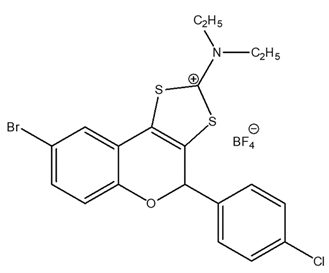 Figure 1. The chemical structure of BrCl-flav |
| References [1] Pendleton, J.N.; Gorman, S.P.; Gilmore, B.F. Clinical relevance of the ESKAPE pathogens. Expert Rev. Anti-Infect. Ther. 2013, 11, 297–308. https://doi.org/10.1586/eri.13.12 [2] Sarbu, L.G.; Bahrin, L.G.; Babii, C.; Stefan, M.; Birsa, M.L. Synthetic flavonoids with antimicrobial activity: A review. J. Appl. Microbiol. 2019, 127, 1282–1290. https://doi.org/10.1111/jam.14271 [3] Bahrin, L.G.; Hopf, H.; Jones, P.G.; Sarbu, L.G.; Babii, C.; Mihai, A.C.; Stefan, M.; Birsa, L.M. Antibacterial structure-activity relationship studies of several tricyclic sulfur-containing flavonoids. Beilstein J. Org. Chem. 2016, 12, 1065–1071. https://doi.org/10.3762/bjoc.12.100 [4] Moldovan, C.V., Savu, M., Dussert, E., Aboubacar, H., Sarbu, L.G., Matiut, S., Cudennec, B., Krier, F., Ravallec, R., Birsa, M.L., Stefan, M., “Synthetic Flavonoid BrCl-Flav-An Alternative Solution to Combat ESKAPE Pathogens”, Antibiotics (Basel), 11, 1389 (2022). https://doi.org/10.3390/antibiotics11101389 |