

Michele Coluccia
| Novel Benzofuran-Donepezil derivatives to dually inhibit monoamine oxidases and cholinesterases: a multifunctional strategy against neurodegenerative diseases |
| Coluccia Michele1, Arrighi Francesca1, Vernile Sofia1, Giorgio Buttitta1, Paolo Guglielmi1, Arianna Granese1, Paola Chimenti1 and Daniela Secci1 1 Department of Drug Chemistry and Technologies, Sapienza University of Rome, Rome, Italy; |
| Abstract Neurodegenerative diseases (with Alzheimer’s and Parkinson’s diseases as the most prominent representatives) are among the heaviest burdens on healthcare systems all over the world and possess complex and heterogeneous pathogeneses, far from a complete understanding [1]. Among the various factors involved, human monoamine oxidases (hMAOs) and cholinesterases (ChEs: acetylcholinesterase, AchE, and butyrylcholinesterase, BChE) occupy a remarkable position. In fact, both classes of enzymes are clinically targeted in the treatment of neurodegenerative diseases, and the development of dual inhibitors has recently emerged as an interesting approach to enhance the therapeutic efficacy of novel drug candidates [2]. For these reasons, we have decided to develop a series of novel compounds to dually inhibit these enzymes. The design of the scaffold (see Figure 1) took inspiration from the benzofuran nucleus, which we have successfully employed for the design of potent and selective 2-aroylbenzofuran based hMAO-B inhibitors [3]. The benzofuran portion notably resembles the indanone core of the AChE inhibitor donepezil, currently used for the symptomatic treatment of AD. This nucleus was then fused with the piperidine moiety of donepezil through a N-ethyl carboxyamidic linker. The compounds were obtained via a three-step synthetic process and, after silica gel column chromatography, were chemically characterised using 1H and 13C NMR. The inhibitory activity of the derivatives was then evaluated in vitro through spectrophotometric enzymatic inhibition assays against hMAOs and ChEs. 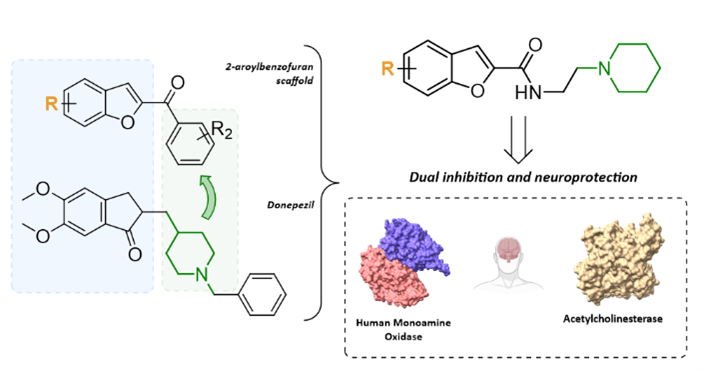 Figure 1. Design of the benzofuran-donepezil derivatives |
| References [1] S.L. Forrest and G.G.Kovacs, Current concepts and molecular pathology of neurodegenerative diseases, Pathology (2025); 57, 2, 178-190 https://doi.org/10.1016/j.pathol.2024.10.006 [2] B. Matthew et al. Emerging therapeutic potentials of dual-acting MAO and AChE inhibitors in Alzheimer’s and Parkinson’s diseases, Arch Pharm Chem Life Sci. 2019;352:1900177 https://doi.org/10.1002/ardp.201900177 [3] P. Guglielmi and M. Coluccia, et al. Design, synthesis, and biological activity of 2-aroylbenzofuran-3-ols and 2-aroylbenzofuran derivatives: A new route towards hMAO-B inhibition, Eur. J. Med. Chem., 297 (2025) https://doi.org/10.1016/j.ejmech.2025.117983 |