

Fabio Di Ricco

| Targeting Nuclear Receptors for Therapeutic Modulation of Hepatic Lipid Accumulation via THR-β and PPARγ |
| Di Ricco Fabio1, Caddeo Andrea2, Kowalik Marta Anna2, Perra Andrea2, Manera Clementina1, Rapposelli Simona1 1 Department of Pharmacy, University of Pisa, Via Bonanno Pisano 6, 56126 Pisa, Italy; 2 Department of Biomedical Sciences, University of Cagliari, Unit of Oncology and Molecular Pathology, 09042 Monserrato, Italy. |
| Abstract Metabolic dysfunction is a major driver of liver diseases, including metabolic dysfunction–associated steatotic liver disease (MASLD), its progressive form metabolic dysfunction–associated steatohepatitis (MASH), and ultimately hepatocellular carcinoma (HCC). Due to the multifactorial nature of these conditions, nuclear receptor modulation has emerged as a promising therapeutic strategy, given its central role in regulating metabolic homeostasis. Among these targets, thyroid hormone receptor beta (THR-β) and peroxisome proliferator-activated receptor gamma (PPARγ) have gained increasing attention. THR-β agonists enhance hepatic lipid metabolism, while PPARγ, upon heterodimerization with retinoid X receptor alpha (RXRα), regulates adipogenesis and lipid storage. In this study, we investigated the effects of two compounds acting on these pathways: TG68, a prodrug targeting THR-β [1], with IS25 as its bioactive form, and BVT.13, a PPARγ modulator [2] (Figure 1). Cell viability assays in HepG2 cells demonstrated that both compounds are well tolerated, with no significant cytotoxicity at the tested concentrations. We then evaluated their impact on intracellular lipid accumulation, a hallmark of MASLD. Treatment with either TG68 or BVT.13 significantly reduced intracellular lipid content, indicating a beneficial effect on hepatic lipid metabolism. Given their complementary mechanisms of action, we further explored the potential synergistic effects of combined treatment. Based on these findings, a structure-activity relationship (SAR) study was initiated to design and synthesis new analogues of BVT.13 and TG68 in order to further investigate them alone and/or in combination as a potential treatment to counteract MASLD. 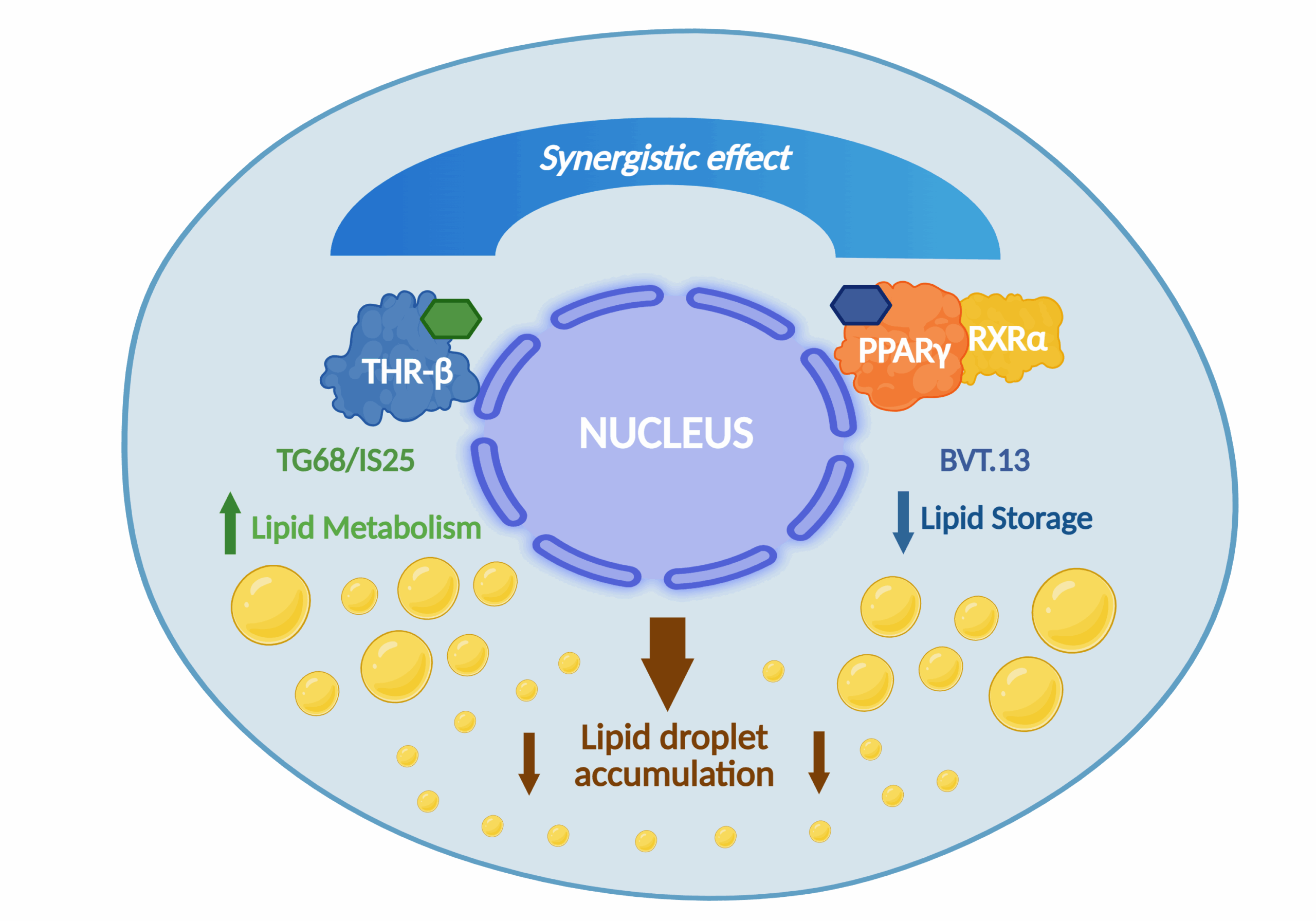 Figure 1. Synergistic targeting of THR-β and PPARγ in hepatic lipid metabolism |
| References [1] Caddeo, A. et al. TG68, a Novel Thyroid Hormone Receptor-β Agonist for the Treatment of NAFLD. Int. J. Mol. Sci. 2021, 22, 13105. https://doi.org/10.3390/ijms222313105 [1] Östberg, T. et al. A New Class of Peroxisome Proliferator-Activated Receptor Agonists with a Novel Binding Epitope Shows Antidiabetic Effects. J. Biol. Chem. 2004, 279, 41124–41130. https://doi.org/10.1074/jbc.m401552200 |