

Keynote & Invited Speakers

Yener Çağla Çimendereli (Çağla pronunciation: “Cha-la”) is a Lecturer in the Department of Philosophy and Religious Studies at Old Dominion University. She is also a PhD Candidate in the Philosophy Department at Syracuse University. As the 2025-2026 recipient of the Marjorie Boulton Fellowship, her research is currently supported by the ESF. She works on language ethics and linguistic justice. More than half of the people in the world are multilingual, many of them speaking languages as nonnative speakers. Having a clear picture of what navigating the world as a nonnative speaker entails is essential for understanding the moral and social implications of linguistic regimes. In her research, she identifies the ways in which speaking a language one did not acquire as a native tongue may impair an agent’s essential human capacities even when the speaker passes as a competent speaker. She is from Istanbul and did her undergraduate work at Boğaziçi University, earning a dual-degree in Political Science & International Relations and in Philosophy. She also earned a master’s degree in Philosophy from the same university. Her MA thesis was on Inference to the Best Explanation in Moral Theory.
She’s an invited speaker in the satellite Workshop on Linguistic Justice.
abstract
The Concept of Nonnative Speaker
Political theorists and philosophers working on linguistic justice frequently use the concept of nonnative speaker in order to designate their subject-matter but some linguists and English Language Teaching (ELT) scholars have recently contested the use of the concept. Even though this is an ongoing debate about what I call ‘eliminativism about the concept of nonnative speaker’ one may worry that the lack of a similar debate among the scholars of linguistic justice indicates that they are lagging behind and falling short in terms of interdisciplinarity. This worry may falsely lead to the conclusion that the entire debate in linguistic justice, built around the native and nonnative speaker dichotomy, is flawed, useless and maybe even harmful for the victims of linguistic injustice. In this paper, I address this potential worry and argue that nonnative speaker is a necessary and useful concept for discussing various injustices. Drawing from similar discussions in social metaphysics, I offer a ‘moderately social constructivist account’ of nonnative speaker which answers the needs of linguistic justice theories despite some worries partially raised by linguistics and ELT scholars. First, I disentangle various reasons presented for eliminativism in linguistics and ELT which are not always distinctly formulated. I show that as long as these reasons are supported from a methodological perspective, they can only justify eliminativism within a particular field and should not be expanded to other parts of life without additional discussion. I particularly discuss two influential papers defending an eliminativist position in psycholinguistics in the literature. These papers argue that nonnative speaker is too coarse as a concept to accurately measure linguistic behavior and that its use adds to the existing bias of researchers against nonnative speakers, thereby compromising the scientific inquiry. I show that although these two reasons may be legitimate according to the norms of research design, their implications are limited to psycholinguistics. They don’t justify the further claim that the very existence of nonnative speaker in other aspects of social life constitutes harm for nonnative speakers in virtue of feeding into bias, nor do they provide a conclusive reason for the global elimination of nonnative speaker. Similarly, I argue, the concerns raised against ‘native-speakerism’ in ELT do not transcend outside of the discipline and fall short of establishing a global eliminativism for nonnative speaker. After explaining that eliminating a concept from all aspects of social life, including political and philosophical research as well as real-life practice, is a substantive moral and political proposal and cannot be settled by field-specific concerns for research-design, I take on the task of discussing the alleged reasons for eliminating nonnative speaker. I argue that eliminating the concept may be more harmful for the victims of linguistic injustice especially because linguistic injustice is still a relatively underidentified phenomenon facing major resistance and eliminating nonnative speaker may risk erasing the real life injustice from academic and political debates. I conclude by offering an account of nonnative speaker as solidarity following similar approaches to disability as solidarity.

Barbara Konat is Head of the Laboratory of Everyday Argumentation and Persuasion (LEAP) at the Faculty of Psychology and Cognitive Science, Adam Mickiewicz University. She is the author of Emotional Appeals in Argumentation: From Rhetoric to Psychology and Artificial Intelligence (2025). Her research examines the relationship between emotion and argumentation by integrating philosophical, psychological, and computational-linguistic approaches within cognitive science. She currently leads PersOn, a project on pragmatic mechanisms of persuasion in online communities, focusing on phatic interaction and emotional synchrony. She publishes in Argumentation, Informal Logic, Language and Social Psychology, and Language and Cognition, among others.
abstract
Emotion, Argument Strength, and Experimental Philosophy
Emotional appeals have had an ambiguous place in theories of argumentation. Starting with Aristotle’s concept of pathos, they were later often treated as fallacies. More recent work by Douglas Walton, Michael A. Gilbert, Christian Plantin, and Christopher Tindale has reopened the question of their argumentative legitimacy. This lecture approaches that question from the perspective of experimental philosophy of argumentation. Argumentation theory asks whether emotional appeals can be reasonable; psychology asks whether they are persuasive; experimental philosophy allows us to ask how ordinary reasoners evaluate arguments when such appeals are present.
I will present work from a research program in which we refine the concept of pathos through psychological theories of emotion and test its effects on perceived argument strength within a framework inspired by Petty and Cacioppo. I will also discuss how computational and AI-supported analysis of naturally occurring discourse can complement experiments by showing how emotional appeals function in real persuasive exchanges.

Masaharu Mizumoto is an Associate Professor in the School of Knowledge Science at the Japan Advanced Institute of Science and Technology. He has edited Epistemology for the Rest of the World (OUP 2018) and Ethno-Epistemology: New Directions for Global Epistemology (Routledge 2020). His publications include articles in Philosophical Studies, Episteme, Inquiry, Language Sciences, and IEEE Access. He is now working on several international AI-related projects, such as “Cross-Linguistic Semantic Alignment”.
He’s the keynote speaker in the satellite Workshop on Linguistic Justice
abstract
AI Cross-Linguistic Inconsistency: Should we defer to or disagree with?
If concepts differ across languages, it becomes possible for a situation to arise where “the translation is correct, yet the truth value differs.” Large Language Models (LLMs) based on large-scale corpora have, in a sense, supported the use theory of meaning and undermined the status of truth-conditional semantics. However, as a result, multilingual LLMs sometimes provide contradictory answers for different languages. AI developers can intentionally resolve this cross-linguistic inconsistency in reinforcement learning (RL) as an undesirable outcome. However, this could force non-English speakers into a cross-linguistic deference to English. On the other hand, if multilingual LLMs were truly faithful to individual languages, cross-linguistic disagreement would become possible. Although this is an issue that predates AI, the impact of such decisions has grown significantly due to recent AI developments and widespread use, and it is now a problem that goes beyond the scope of decisions that can be made by a handful of representatives at AI companies. In this talk, after outlining the implications of both approaches, I will also point out the limitations of a third path: having the LLM itself recognize cross-linguistic inconsistencies and present options to users.
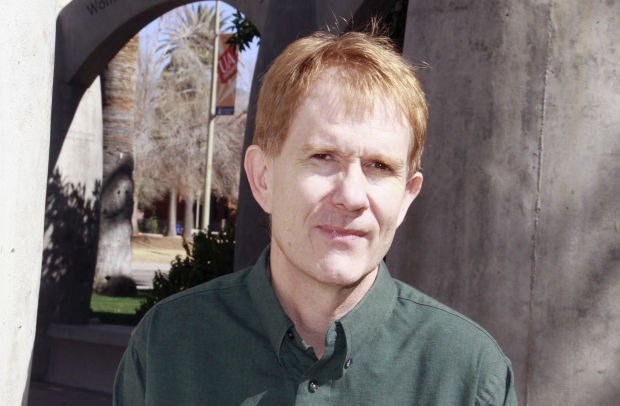
Shaun Nichols is Distinguished Professor of Arts & Sciences in Philosophy and Chair of the Sage School of Philosophy at Cornell University. He works at the intersection of philosophy and cognitive science, and his research concerns the psychological underpinnings of philosophical thought. He is the author of Sentimental Rules: On the Natural Foundations of Moral Judgment, Bound: Essays on Free Will and Moral Responsibility, and Rational Rules: Towards a Theory of Moral Learning (all Oxford University Press) as well as over 200 articles in academic books and journals.
abstract
Teleology and the meaning of life
“What does it all mean?” Philosophers generally reject nihilistic responses to such questions about the meaning of life. But what are the presuppositions behind these questions? I will argue that questions about the meaning of life are animated by the presupposition that the world is suffused with purposes. The teleological orientation is revealed in classic studies with children (Kelemen 1999), as well as more recent work on categorization (Rose & Nichols 2019, 2020). Our new work indicates that, at least for animals, people robustly affirm teleological views. People also draw on their teleological views to explain why animals have the features they do. The idea that people assume that humans have a purpose is thus not exceptionalist – people think that everything from foxes to spiders have purposes. Thus, I will argue that part of the reason it is natural to ask about the meaning of life is precisely because we presuppose that there *is* a purpose for our existence.

Francesca Panzeri is an Associate Professor of Philosophy of Language in the Department of Psychology at the University of Milan-Bicocca. She received her PhD in Philosophy from the University of Milan. Her research focuses on pragmatic phenomena, including the derivation of implicit content, metaphor, and irony. She has conducted experimental studies on the acquisition of pragmatic competence in both typical populations (neurotypical adults and children) and atypical populations (children and adolescents with prelingual deafness, autism, and Down syndrome). Another line of her research investigates the cues that facilitate the detection of irony in face-to-face interactions, computer-mediated communication, and large language models.
abstract
It’s a Bitter-Sweet Irony: Understanding Ironic Compliments
Verbal irony consists of an evaluative statement whose literal meaning is incongruent with the context. While ironic criticisms (positive statements conveying negative evaluations) have received considerable attention, ironic compliments (negative statements conveying positive evaluations) remain comparatively understudied. This talk examines the asymmetry between these two forms of irony, reviewing evidence showing that ironic compliments are both less frequent in everyday communication and more difficult to interpret than ironic criticisms. Several explanations are discussed, including differences in communicative goals, negativity bias, expectation violations, processing demands, the risk of misunderstanding and the role of multimodal irony markers, such as facial expressions and prosody. Evidence from studies involving both neurotypical and atypical populations further highlights the cognitive and social mechanisms underlying irony comprehension. The findings contribute to a broader understanding of how evaluative meaning is communicated and interpreted in social interaction.